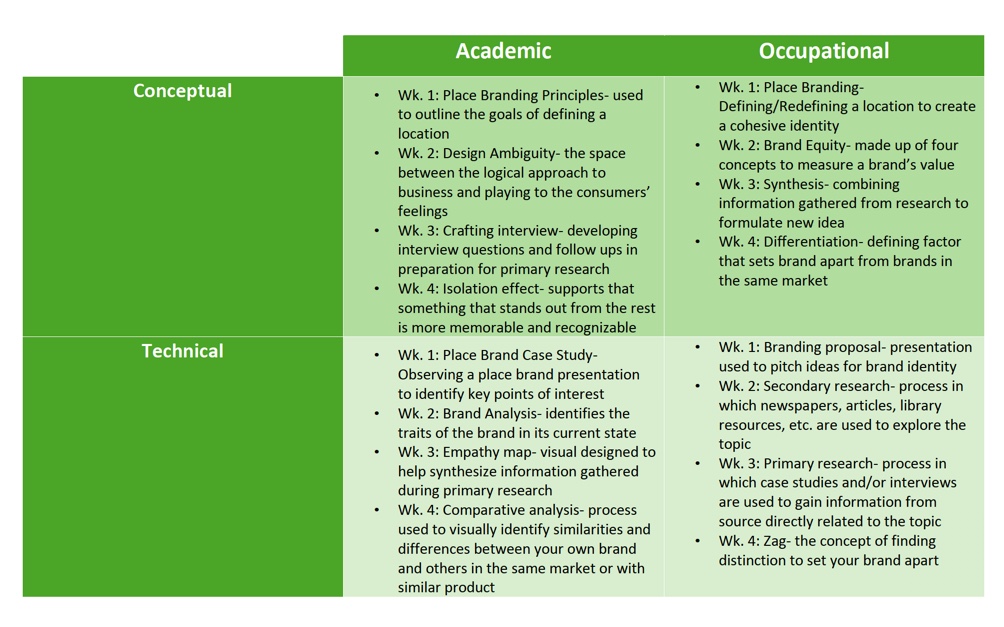
Month 5: Design Research


This is not to say I haven’t been gaining a lot of extraordinary skills that will serve me well, but I’m tired. Working retail during the holidays can sometimes be the equivalent of letting someone stab you in the stomach with a hot poker, smiling while thanking them for this and still asking them to come back again. Having this kind of day and then coming home to homework assignments has not been my favorite experience this month. However, it has not stopped me from learning the practical steps towards the rabbit hole that is Place Branding (and I still have faith in humanity so that’s also a plus).

In this month’s course we learned the behind-the-scenes work involved in creating a brand for, or rebranding, a neighborhood or location in our cities. For my project, I chose the Meridian Street North area in Huntsville, AL. The assignment was to research the area’s current identity in the eyes of the residents to form a more positive image for our location’s brand. Needless to say, this took me beyond just Google searching information about my location and straight into the community itself…

Why Meridian Street North

The assignment suggested choosing an area that was close by as we would need to visit it during the course of the project. After careful consideration, I chose Meridian Street North because it is close to where I grew up, from what I remember, it’s always been kind of ambiguous due to business opening and closing over the years and there not being a prominent college campus feel surrounding the schools in the area. It is a low-income, majority Black area that does not have a great representation, due to the abundance of shootings and heavy cop presence through the years. However, Meridian Street North is unique because there are four educational institutions on this one street.

Within a 3-mile radius sits (in order of appearance coming from Winchester Ave.) Alabama Agricultural and Mechanical (A&M) University, J.F. Drake State Community & Technical College, Martin Luther King Jr. Elementary School, and Lee High School. Imagine being able to complete majority of your life’s formal education on one street. This may not be everyone’s dream, but for some people this could be ideal. The area is special and for this multi-course project, I want to use it as a base for learning to bring distinction to an area that deserves more positive recognition.


Connecting/Synthesizing/Transforming

To start, we delved into Primary and Secondary research as necessary steps in the design process. Despite their names, Secondary research is typically the first task completed, in which internet searches, library records, journal articles and other forms of indirect information can be used as an introduction to the desired topic (Argo, 2019; Schwanbeck & Acayo, 2015). Using Secondary sources of information can help formulate a direction that leads to the Primary sources whether that be people who is directly related to the topic or in my case, people directly connected to Meridian Street North–residents, students, businesses, etc.

My Secondary Research

I tried to look up Meridian Street North, itself, as well as the history of the schools on the street. Although I could not find information on when Meridian Street was established, I was able to start with the history of Alabama A&M (n.d.). It is a HBCU and land-grant instituation in Normal, AL that was founded by William Hooper Councill, a former slave and teacher who also served as the school’s first principal (1875-1887; 1888-1890) and president (1890-1909; Blue, 2008). It was originally located in Downtown Huntsville and was intended to teach Black teachers to work in the segregated school system before growing into a “vocational-technical training facility” (Blue, 2008, para. 5) that rivaled Tuskegee. It then changed gears to train Black people in agriculture and the mechanical arts (City of Huntsville, n.d.).

In 1891, when the school received its land-grant, it was relocated to Normal, AL in it’s current location on Meridian Street North (AAMU, n.d.). It wasn’t until 1961 that Joseph Fanning Drake State Technical and Community College took up residence down the street from A&M on land deeded by the University (J.F. Drake State Community and Technical College; Drake, n.d.). Drake was also intended to support the Black community by providing two-year technical degrees in areas such as cosmetology, auto mechanics, masonry, etc. Today, the programs extend to computer information systems, electrical engineering and other associate degrees to meet Huntsville’s growing demand for Technology graduates (Drake, n.d.). This leads to Martin Luther King, Jr. Elementary (n.d.) which opened in 1967 adjacent from an open field down the street from Drake. And lastly, Lee High School (n.d.) which was originally a few blocks from Meridian Street North, but was relocated to its current location in 2010.

In addition to the history lesson, I also had to get pictures of the area that will be used as inspiration for my design later in the process.
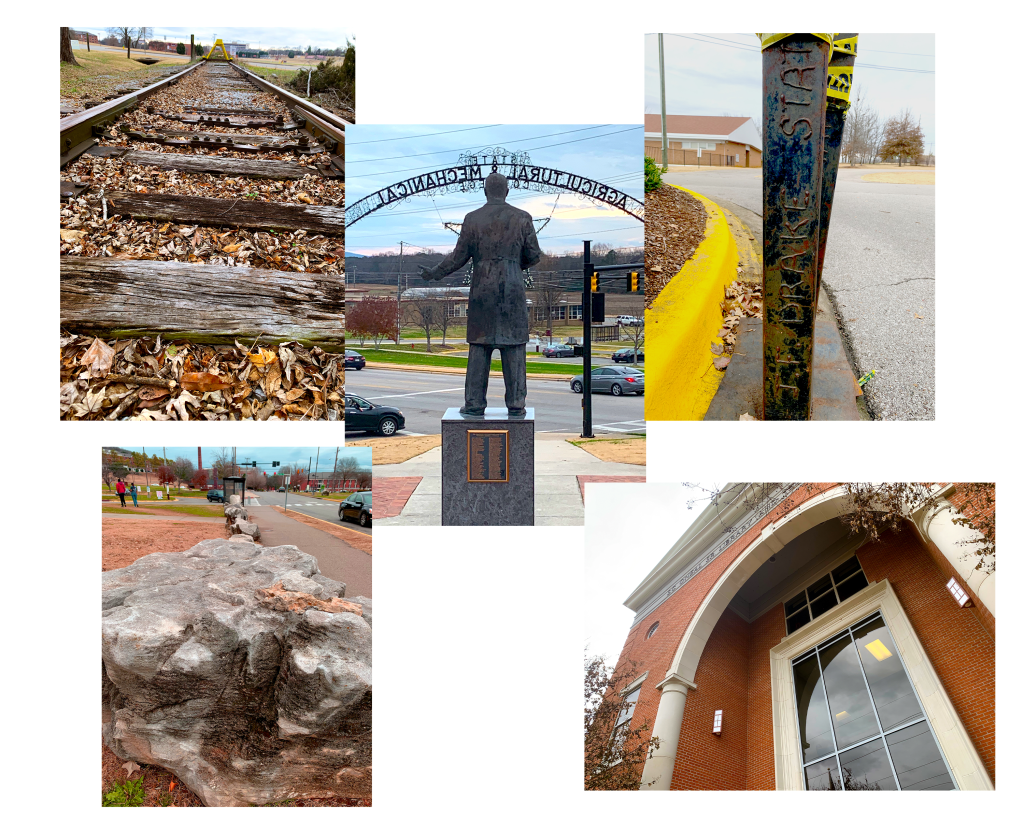
A few of the photos taken during my Secondary research phase

My Primary Research

Now that I’d gathered everything I could about schools, it was time to begin my Primary research and speak to individuals with some knowledge and/or connection to the area. Due to time constraints, I was only able to interview three women native to Huntsville with connections to Meridian Street North. Given they are natives of the area, I expected them to know all the good and bad of the area such as its history of violent incidents that have taken place there.

Both, Alexis and Angela (personal communications, December 13, 2019) were graduates of A&M, class of ’82 and class of ’13, respectively. Maria was not a graduate of A&M, but often went to Meridian Street with her mother to eat at Blessin Restaurant in the Meridian Plaza and had friends who attended school at A&M and Drake. Given the knowledge of the area’s history of shootings and fights, I was suprised to find that each of the interrviewees described the area as “safe” and “comfortable feeling” (Alexis H., Angela H., & Maria B., personal communications, December 13, 2019).

There was expression of optimistic views for programs to be implemented between the schools to bring connection to the educational institutions and hope that the City of Huntsville will make an effort to invest in Meridian Street North as much as it does the Entertainment District and majority White areas. The resounding feeling that putting an identity to Meridian Street North can bring direction and a sense of pride to this area that has long been dedicated to empowering this African American community through education.

Although I believed the Meridian Street area could be viewed as an Education District or Learning District, the combined agreement of the interviewees helped solidify this design approach. Of course, there may be people in the area who may not have shared the same experiences and would have varying opinions on the area and its direction. There is a unique vibe to Huntsville as it is growing to become a city heavy with Engineering and Technology jobs to fill the growing number of military and government contractor positions in this area. Areas are being built up, renovated and redesignated for entertainment and business all over the city. Each of the schools on Meridian Street North have also updated their curriculum and direction to help support Huntsville’s growth.
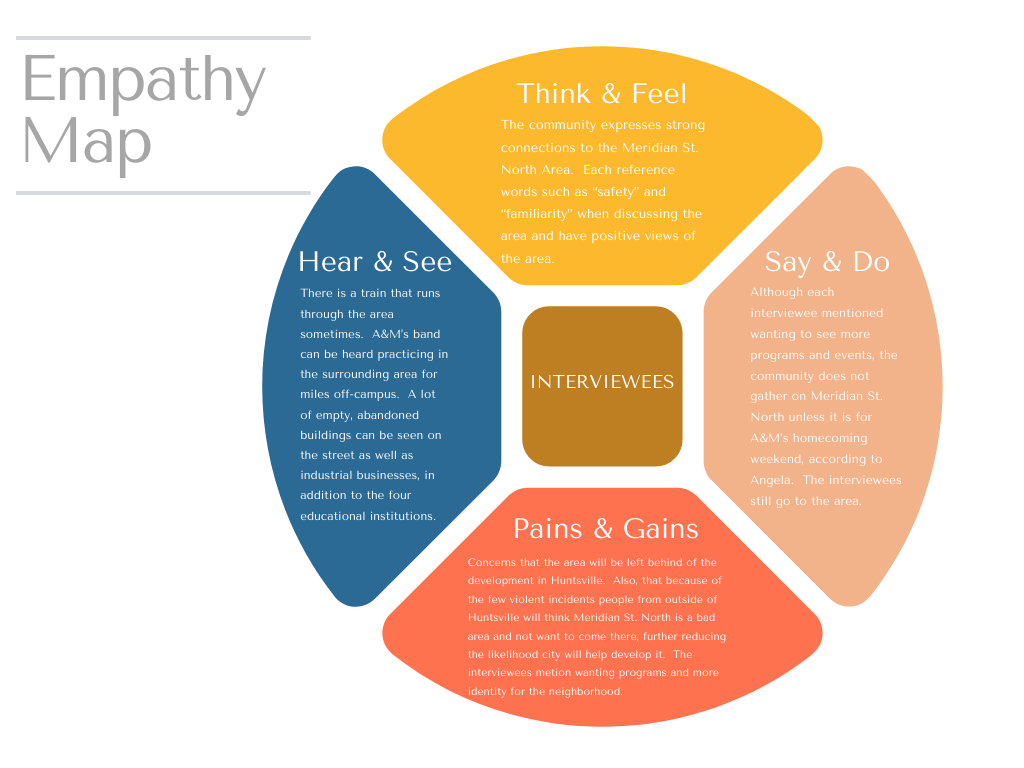
My Empathy Map Design

Problem Solving

One of my biggest issues during this design proces was developing the interview questions. Coming up with how to take the information I’d gained and ask someone without feeding them answers was fairly difficult. Schwanbeck and Acayo (2015) noted that it can be difficult moving from Secondary to Primary research when you collected an overwhelming amount of information.

My only options were: 1. Draft specific questions to steer my interviewees into the topic, or 2. Write minimal questions and allow small interjections that stem from the person to steer the conversation. Utimately, I went with Option 2, as it allowed the interview to feel more conversational and not like an interrogation. This allowed me to get honest information from each interviewee on their thoughts and feelings of the area as well as their connection.
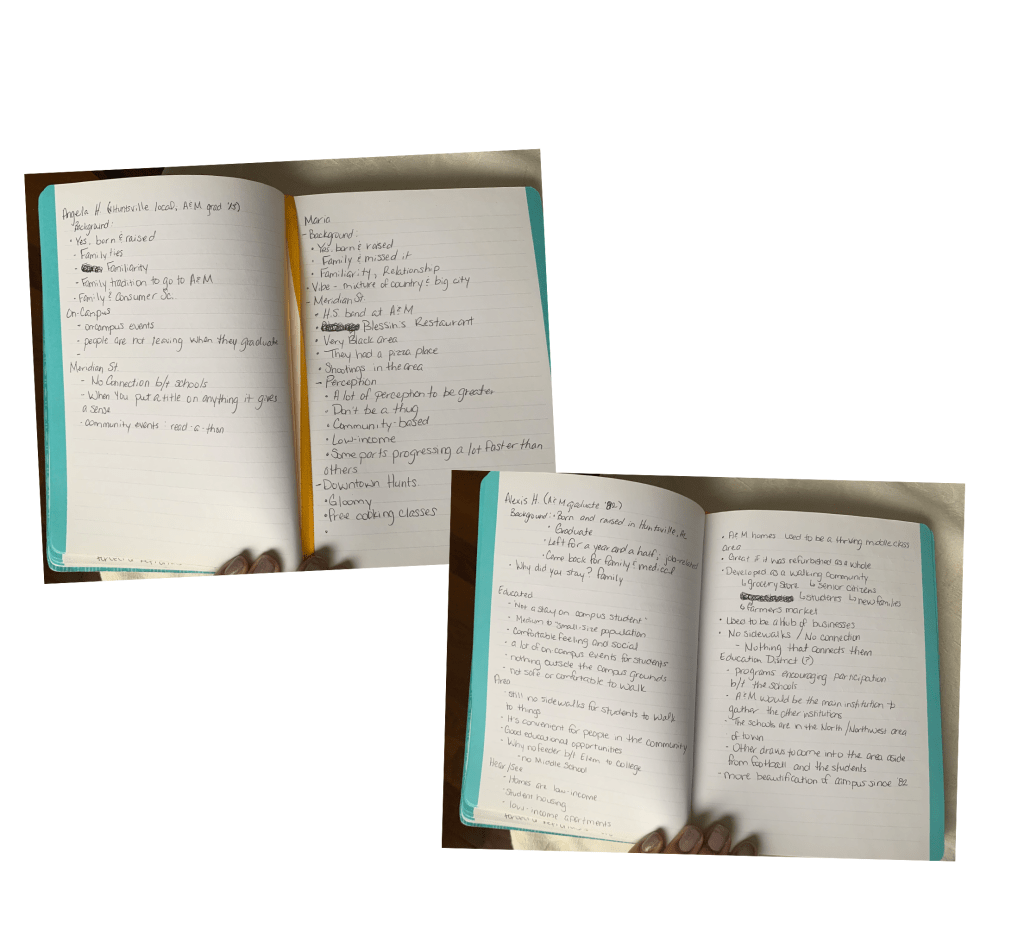
Interview notes

Innovative Thinking

While completing my comparative analysis, it was difficult to find any Education Districts that weren’t just school systems. To help set Meridian Street North apart, I was forced to use other terms such as the Learning District and the STEM District to help with the search. When using this term, I found that Washington, DC is developing a program to rebrand the city as the District of Learning. However, in Huntsville, there is no known Learning District nor is there a STEM District that I was able to find during my search. The STEM District could be an accurate name for the area as the schools provide programs and clubs that support STEM education. With more community-based programs and groups or businesses such as cybercafes and shared spaces, this could grow into a STEM-focused neighborhood.
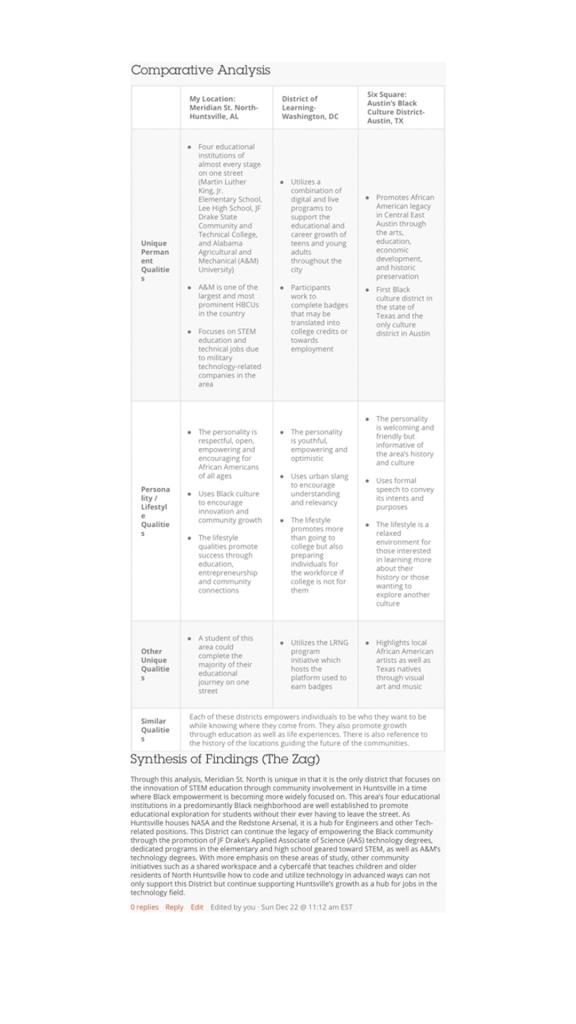
My Comparative Analysis

Acquiring Competencies

Competencies Acquired

In Conclusion…


References:

Alabama A&M University (AAMU). (n.d.). Our history. Retrieved from https://www.aamu.edu/about/our-history/index.html

Argo, B. (2019, December 02). Week 2 live session [Online video]. Retrieved from https://online.fullsail.edu/class_sections/46808/modules/201234/activities/1241030

Blue, C. (2008, June 1). William Hooper Councill (1849-1909). Retrieved from https://www.blackpast.org/african-american-history/councill-william-hooper-1849-1909/

City of Huntsville. (n.d.). Alabama A&M University (Original Site). Retrieved from https://www.huntsvilleal.gov/historicmarkers/alabama-university-original-site/

J.F. Drake State Community and Technical College. (n.d.). Mission & history. Retrieved from https://www.drakestate.edu/about-drake-state/mission-history

Lee High School. (n.d.). School history. Retrieved from https://www.huntsvillecityschools.org/schools/lee-high-school/schoolhistory

Martin Luther King, Jr. Elementary. (n.d.) Martin Luther King, Jr. Elementary. Retrieved from https://www.huntsvillecityschools.org/schools/martin-luther-king-jr-elementary/martin-luther-king-jr-elementary

Schwanbeck, A. & Acayo, P. (2015, February 24). Learning design research [Lynda.com course]. Retrieved from https://www.linkedin.com/learning/learning-design-research/primary-vs-secondary-research?u=50813145
Month 4: Reflection of Effective Copywriting


Do I write right?!

In the beginning of this course, I was extremely intimidated by the idea of writing copy. While I’ve written thesis before, writing academically for most of my life versus writing creatively for a month was no small task, to say the least. I do enjoy writing so I was excited to break out my academic bondages, but then the assignments came.

My process

This month we explored the wonderful world of copy. Using Felton’s (2013) Advertising: Concept and Copy as the textbook, we researched effective tips and processes used to develop leading copy used in advertising today. Felton’s (2013) step-by-guidance and principles for writing copy helped alleviate some of the fear I was building up about how to come up with concepts. His use of real-world examples also helped support his approach and the load of new information of new informatiton I was taking in.

In addition, we also used Craig Smallish’s (2013; 2014) Lynda.com courses. These courses helped me learn practical approaches to putting together presentations and final product ads for clients as well as the theory behind the practice. It was especially helpful having a Smallish’s (2014) video on “Preparing the presentation” as I was trying to turn in finished testimonial ads rather than mockups for my Week 2 Mastery project. With help from my classmate (Thanks, Vontresia!!) and this course, I was able to finish the project appropriately. So here’s how everything turned out.

My Target Audience and Personas

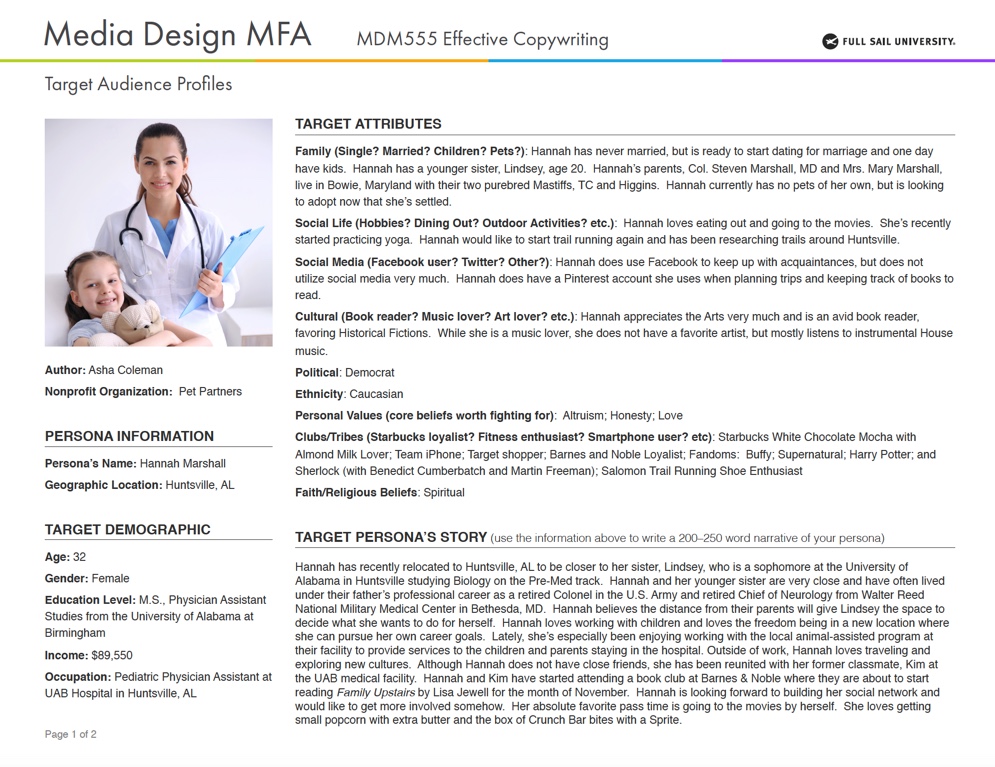
Meet Hannah Marshall

When creating these personas, the goal was to target an audience between the ages of 25-50. It just so happened that Hannah became a 36 year-old, single, Pediatric Physician Assistant who recently relocated to Huntsville, AL to be near her sister. This persona developed into a young woman working in a hospital with children who could potentially benefit from Pet Partners’ services. Hannah’s profile was beneficial for this process because it represents someone who has all of the pieces, but has not connected the dots for pet therapy: wants a pet, works at a facility that could benefit from pet therapy, and looking to become more involved in her new area.

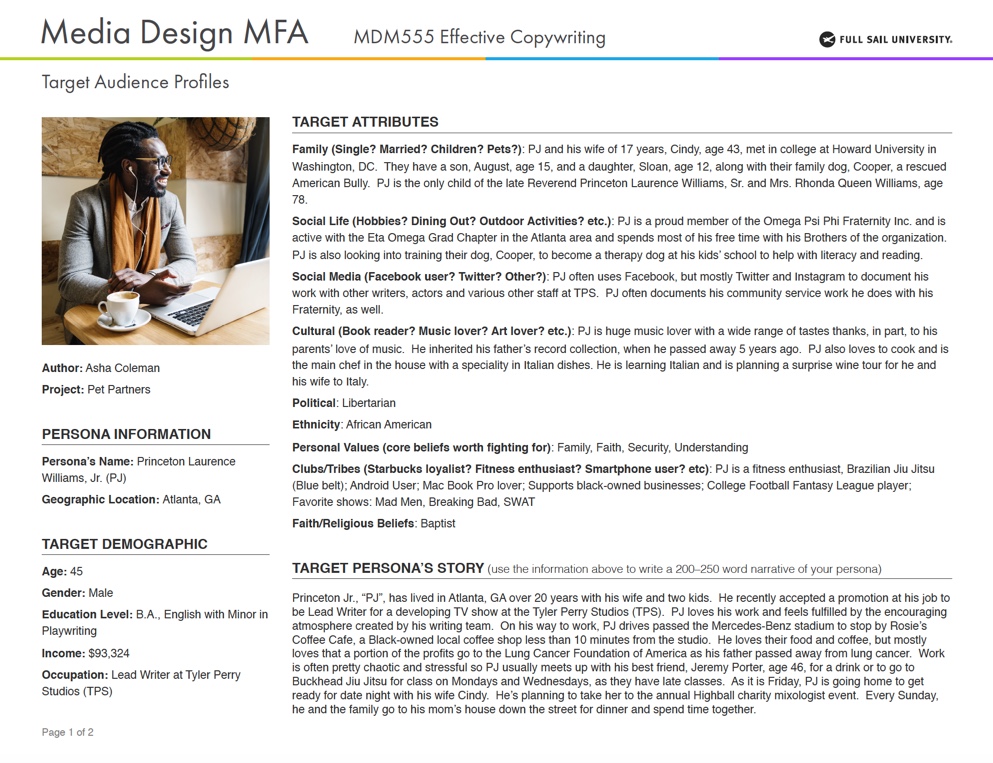
Meet Princeton Laurence Williams, Jr. or “PJ” for short

On the other hand, PJ was developed as someone who is specifically looking to get involved as a pet therapy volunteer at his kids’ school. His involvement in a Fraternity has already predisclosed him to volunteering his time. This persona is meant to represent those who know of pet therapy and work towards compelling them to take that extra step toward making this committment. Using the information collected from these two personas, I developed my first six sketches of the testimonial ads.

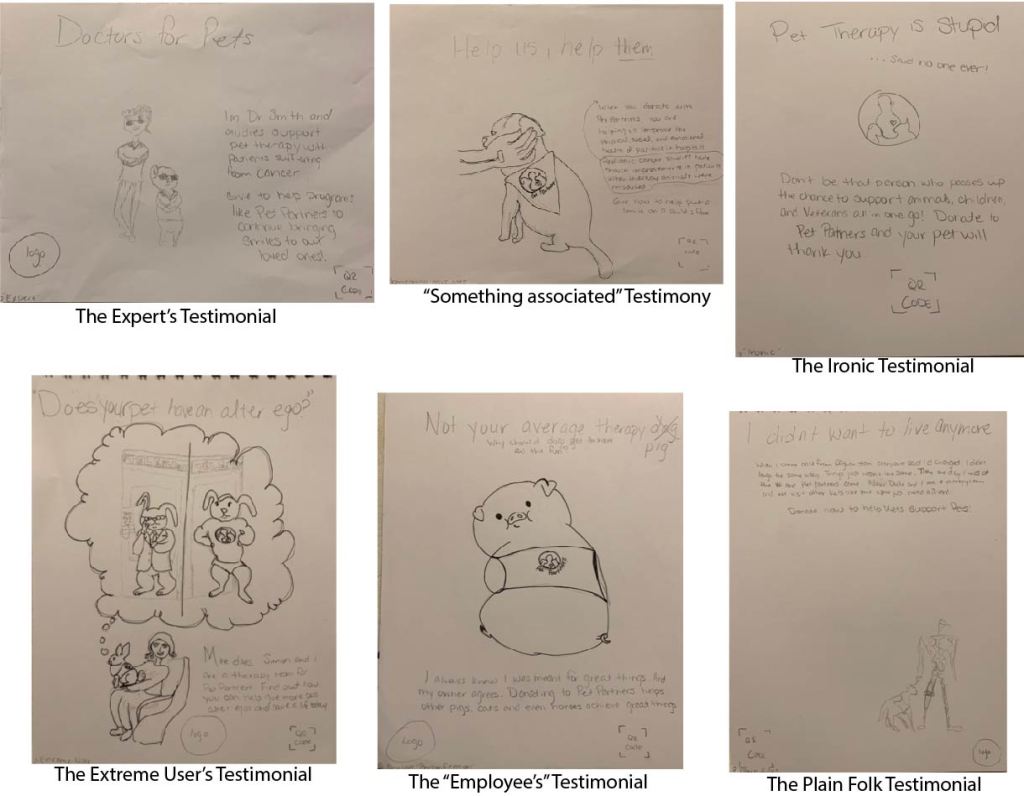
The Testimonial sketches

(Felton, 2013)

So this is the assignment that gave me a good bit of trouble as I was attempting to create finished testimonials to turn in when I needed to just draft mockups. However, as Smallish (2014) stated, it’s best to get the ads as close to being done as possible so the client has a good idea of what the finished product looks like, but there is still room for editing and exploration.

I chose these six as my testimonial ads because they allowed for the most creativity and exploration on how the copy could be represented. Testimonials like Felton’s (2013) Extreme User, the Ironic and the “Employee’s” testimonial allowed me to use a fun and lighthearted approach to the ad while the use of the Expert, Something associated and the Plain Folk testimonial were more serious. I wanted to explore different ways the copy could convey its overall message to inspire someone to either donate to Pet Partners or even become a pet therapy volunteer.

My Initial and Final Comps

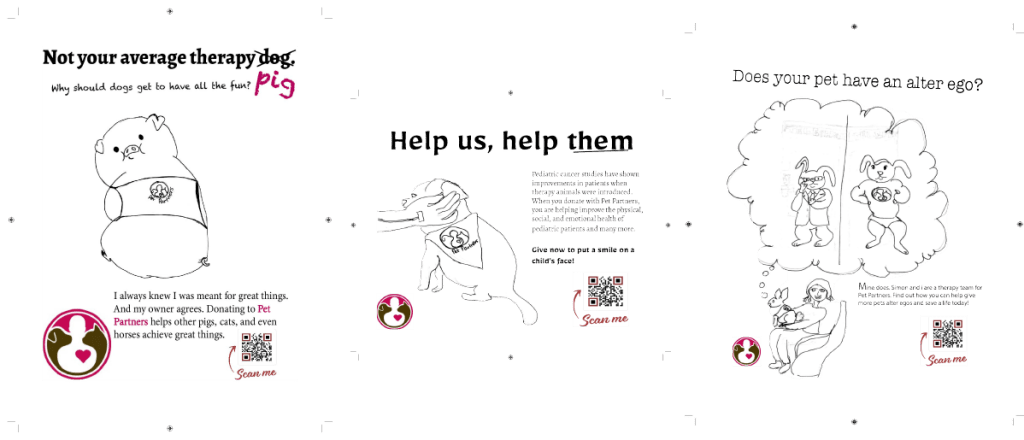
The Initial Comps

The initial comps were incredibly difficult to cultivate as I was unsure about what I was doing and whether I was doing it right. With much needed encouragment from my husband and peers, I continued working on the copy of the testimonials until I felt it portrayed the message I was trying to convey. When developing these particular testimonials, I remember the headlines would come to me and the imagery would immediately follow. I thought about my personas, Hannah and PJ, looking through a magazine or walking by a billboard in their coffee shop and one of these sticking out to them. I think that’s how I chose to pursue these three comps. The body copy was a little more awkward to write, as I had to think of how to continue keeping the audience’s attention while also speaking through another voice and staying authentic to the message. Also, the QR codes were my own little nod to finally understanding what a QR code is for!

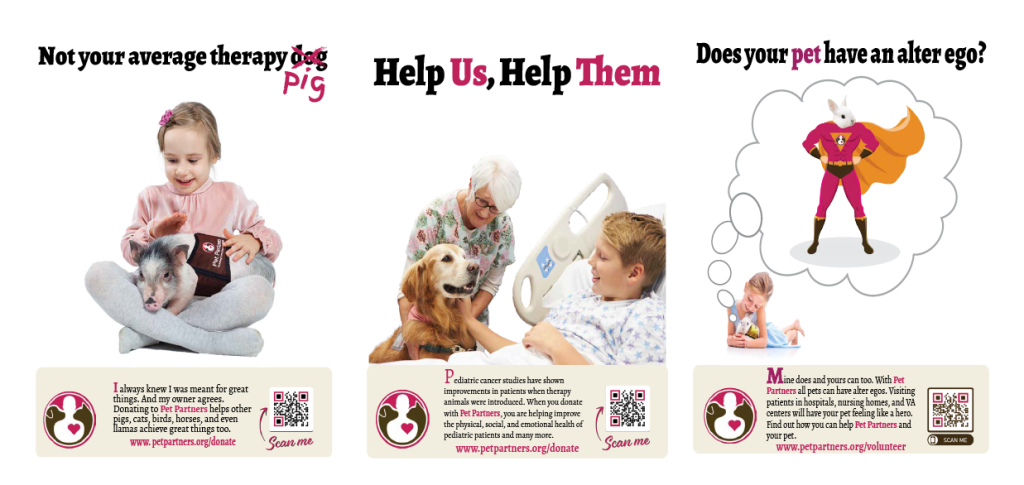
Final Comps

After receiving feedback that the comps needed to all be vertical as well as cohesive, I set out to find ways to improve my testimonials. Initially, I thought about creating the Therapy Pig testimonial with some of the other types of animals Pet Partners has for volunteers. However, I wanted to challenge myself to use the ads I already developed and make each of these different testimonials cohesive. Using the same layout, color palette, and type for each testimonial brought everything together. While I still need to work on my spacing and sizing to really solifidy a cohesive look, the effect of the goal was achieved.

And so, my takeaways

  1. Copywriting is frustrating, fun, and oddly satisfying all wrapped up in one confusing ball. If you ever think you aren’t doing it right, you’re probably just working on your next project.
  2. The greatest copy writers copy (Felton, 2013; Horberry, 2009). Don’t try to reinvent the wheel, just make it look fancier.
  3. Even when you think you’re done with the copy, there’s a good chance you’ll wake up in the middle of the night with an even better idea after it’s already gone to print. So, once it’s done, let it go.

References:

Adams, D. (2011, February 14). What is copywriting and how is it important for a designer? [Online article]. Retrieved from http://www.instantshift.com/2011/02/14/what-is-copywriting-and-how-is-it-important-for-a-designer/

Felton, G. (2013). Advertising: Concept and Copy, 3rd Edition [VitalSource Bookshelf version]. Retrieved from vbk://9780393733921

Horberry, R. (2009). Brilliant copywriting. Harlow, Great Britain:  Pearson Education Limited. Retrieved from https://ce.safaribooksonline.com/book/communications/writing/9780273727347

Smallish, C. (2013, August 16). Developing ideas and design concepts [Lynda.com course]. Retrieved from https://www.lynda.com/Design-Business-tutorials/Developing-Ideas-Design-Concepts/126121-2.html?org=fullsailold.edu

Smallish, C. (2014, May 27). Designing a print ad [Lynda.com course]. Retrieved from https://www.lynda.com/Design-Page-Layout-tutorials/Designing-Print-Ad/155264-2.html?org=fullsailold.edu

Month 3: My Brand Development Journey

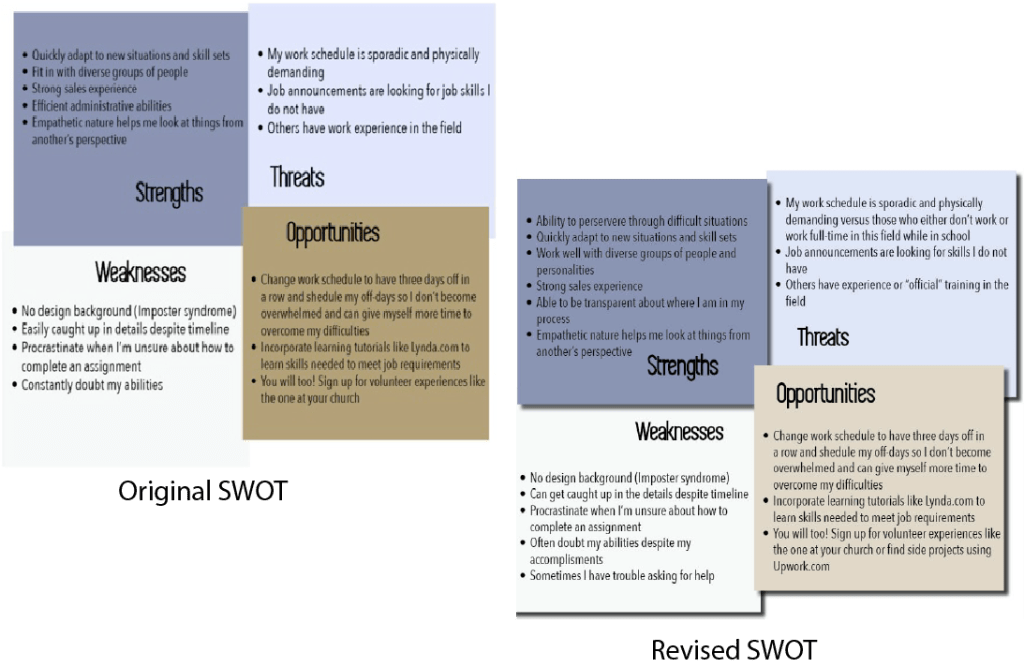
For this assignment, we were tasked with completing a Strengths, Weaknesses, Opportunities, and Threats (SWOT) analysis on myself. As suggested by Quast (2013), I started with Threats and thought about how these external instances can impact my abilities at school. As Professor Kratz (2019) mentioned, this exercise is used to take a look at yourself and consider ways in which you can improve.

Threats:

The threats I thought of stem from my sporadic work schedule, the requirements often found in job announcements, and that those who have more work experience in the field. These threats are external, but now that I have identified them I can make plans to address them. With this knowledge, I was able to think about the opportunities I have available to me.

Opportunities:

Once I identified my threats, I had to take some time to think about ways I could overcome them. First, I realized that because I am in retail, it is possible for me to change my schedule easier than it might be in other jobs. In addition, scheduling my off days so that I’m getting more assignments done on time as well as learning new skills. This leads to my next opportunity of using Lynda.com to continue building my job skills. While I cannot ever hope to catch up to people who have already gained experience in this field, I can start gaining my own experience as my church is currently looking for volunteers in their Media Room. I just have to take the initiative and call to sign up!

Weaknesses:

My weaknesses were also easy to identify as they come up almost everyday in my coursework. I often feel I have Imposter Syndrome in this program as I don’t have a design background. It also makes it difficult when completing coursework using software I’ve never used before. This causes me to become overly focused on the details of my designs regardless of the deadline and at times, to procrastinate because I become overwhelmed before I ever start. All of this culminates with me second guessing myself, often.

My Strengths:

In the end, my strengths have allowed me to keep going throughout this process. Despite knowing this, identifying my strengths was the hardest part of completing my SWOT analysis. I’m not suprised that it was difficult, but I do wish this was something that came easier. Through completing my assignments and discussing with my previous professors, I have found that the identified strengths will help me moving forward.

MY VISION BOARD SWOT Analysis:

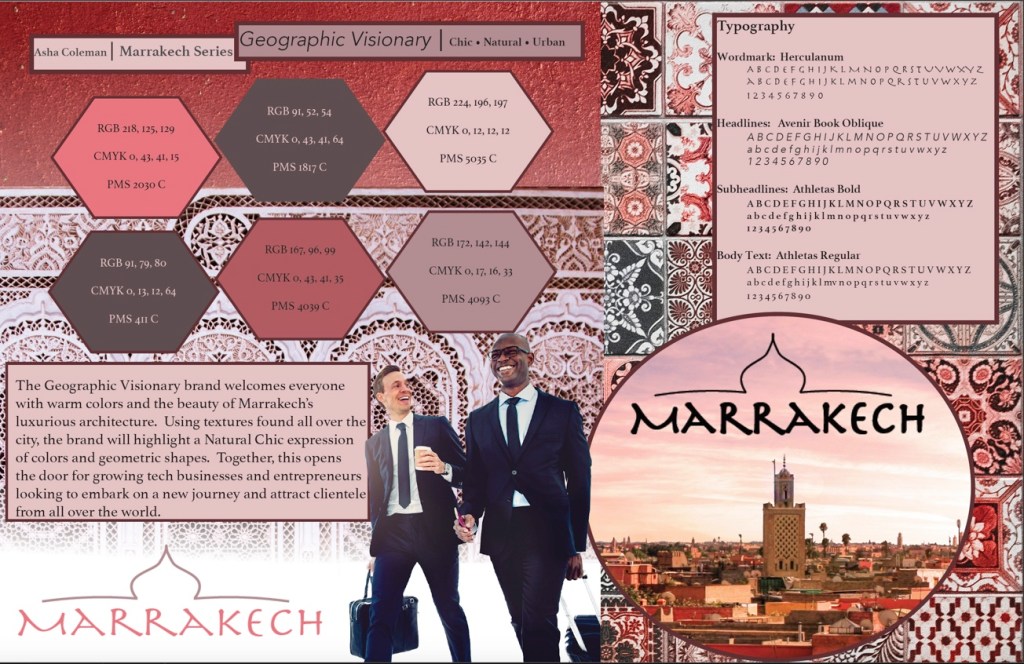
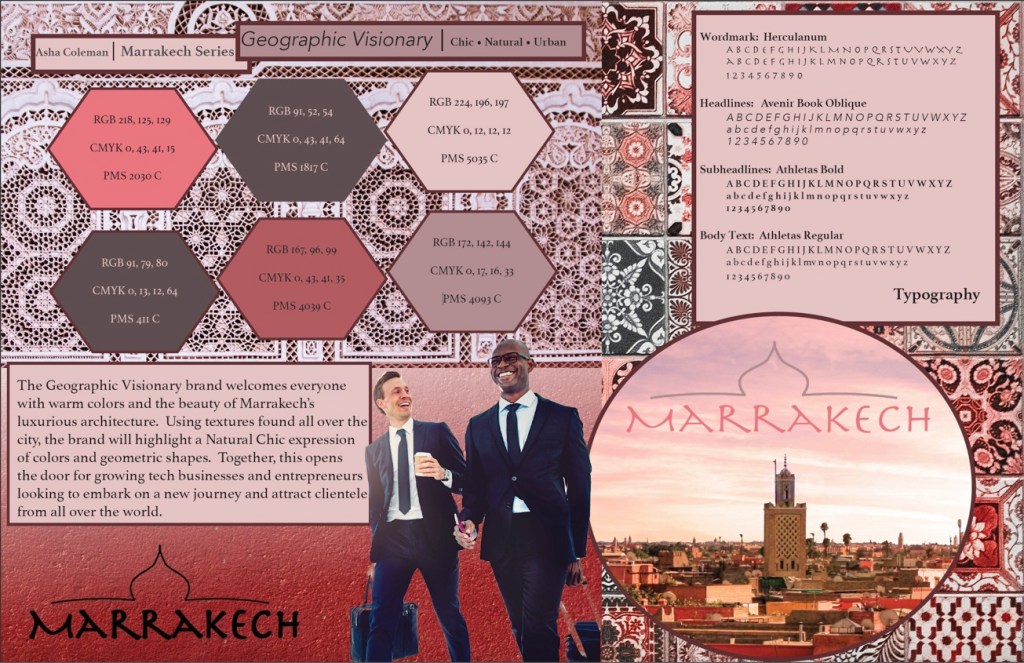
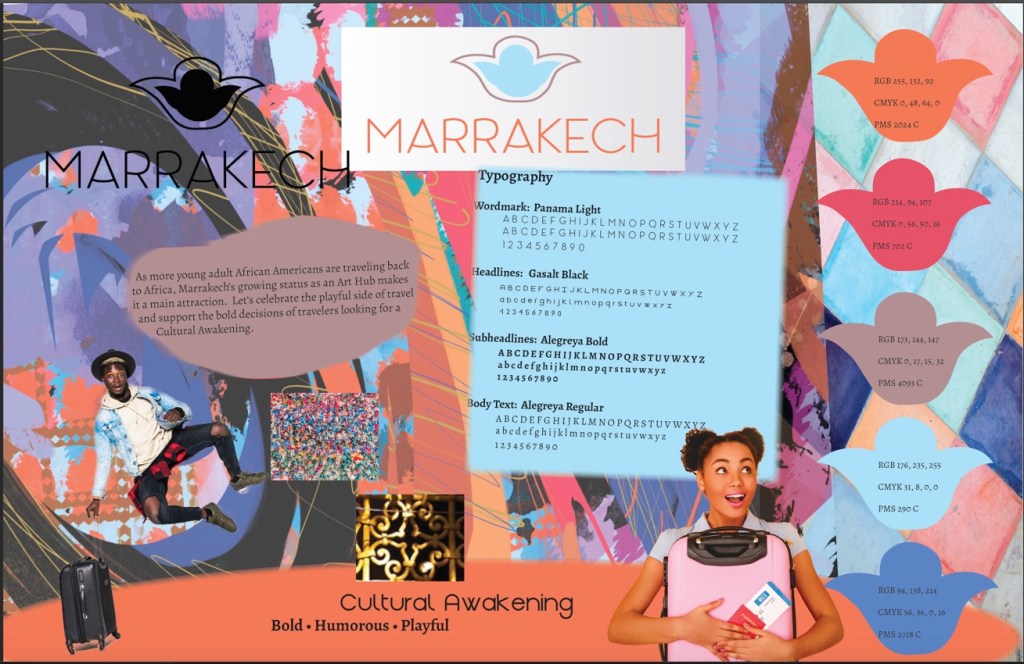
When completing my personal SWOT Analysis, I realized I could complete this analysis in relation to my boards as well. One of the Threats to completing my boards was the time frame the assignment was going to be due and my not having used Adobe InDesign. I took the Opportunity to stay up late and complete the boards the first round. Unfortunately, I created stylesheets rather than actual vision boards. However, one of my strengths is being able to adapt to new software after minimal exposure. On the other hand, my weakness is second guessing myself. So, while I felt like I was learning how to use InDesign fairly quick, I was still unsure how to proceed with creating vision boards. In the end, I had to stick with what worked for the sake of turning the assignment in as it was due. These are all experiences I will continue to have, but by making myself aware of them, I can work towards my goals.

Initial Geography Vision Board
Finalized Geography Board

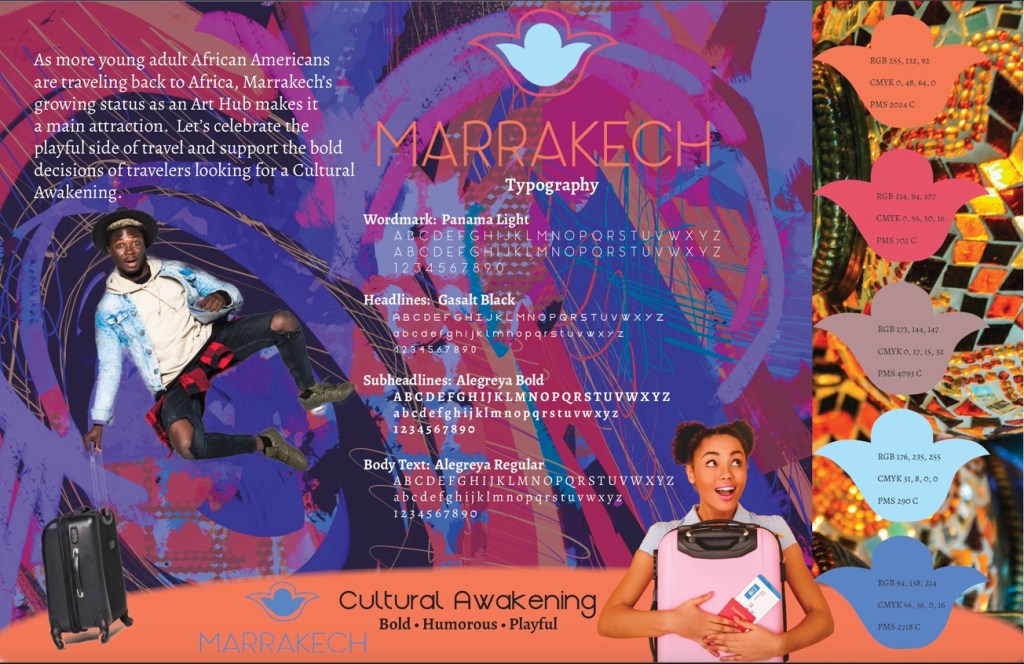
Modern Culture Board
Finalized Culture Board

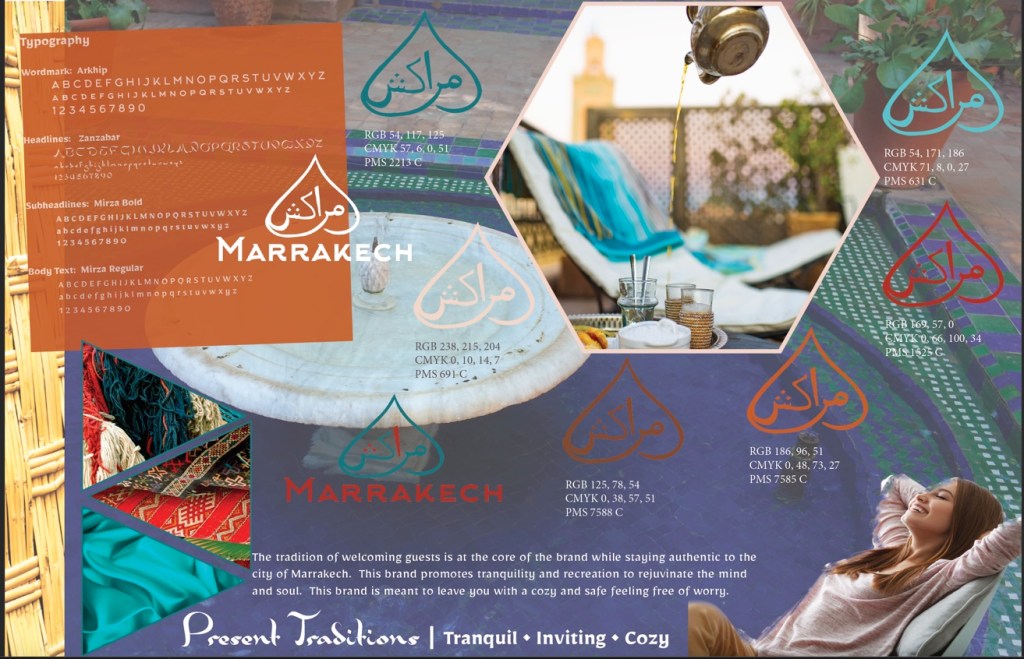
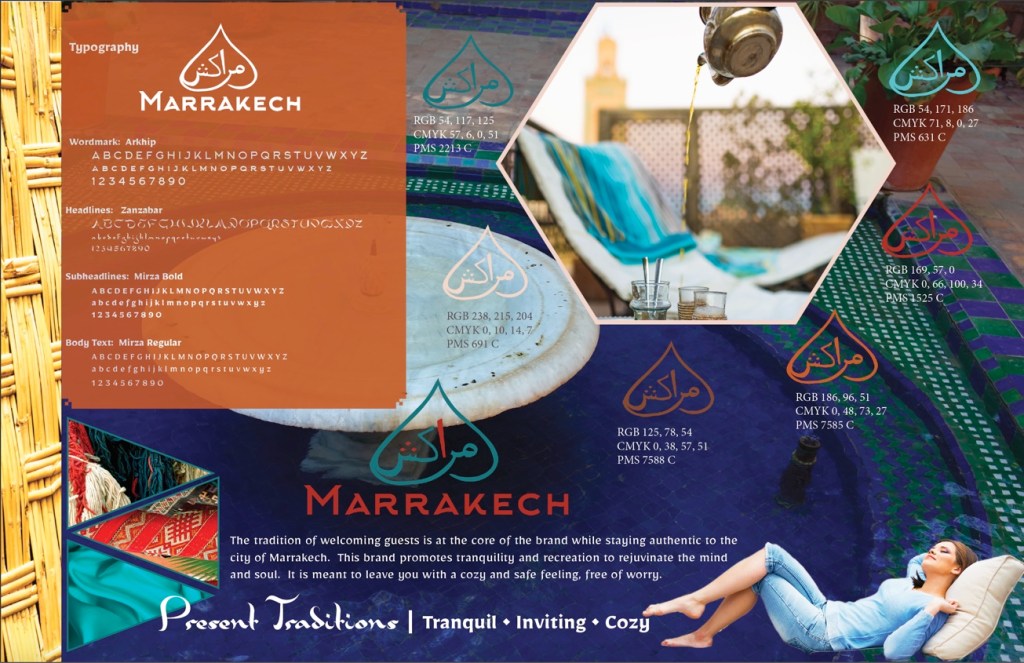
Tradition Board
Finalized Tradition Board

References:

Kratz, A. (2019, October 22). 2821607823484818944. Retrieved from https://vimeo.com/367949415

Quast, L. (2013, April 15). How to conduct a personal SWOT analysis. Retrieved from https://www.forbes.com/sites/lisaquast/2013/04/15/how-to-conduct-a-personal-s-w-o-t-analysis/#6de4fdac28d8

Still Month 2: Defining Client Needs Post

This month has been a whirlwind of new experiences and challenges. This class has presented me with new insights not only about myself but about my skills as a designer. One thing I’ve learned is that I need more structure than I thought when it comes to how my days are set up and the ways I prepare myself to create. As a retail worker, it is difficult for me to lock down any sort of pattern or schedule to study or mentally prepare for school work when I have to work 12p-9p one day and then 10a-9p the next then MAYBE have the day off afterward. It’s not impossible, just harder.

On the other hand, I have found that completing tasks such as logo design are not beyond my capabilities. I would definitely have to hone my skills and learn more about the technical approaches to logo design and typography, but I did it! I was actually quite proud of myself in the end even though I would constantly develop artist blocks and felt like I was being raked over coals when I couldn’t imagine creating one more design idea. I may not foresee a future in logo design, but it’s not outside my scope of abilities.

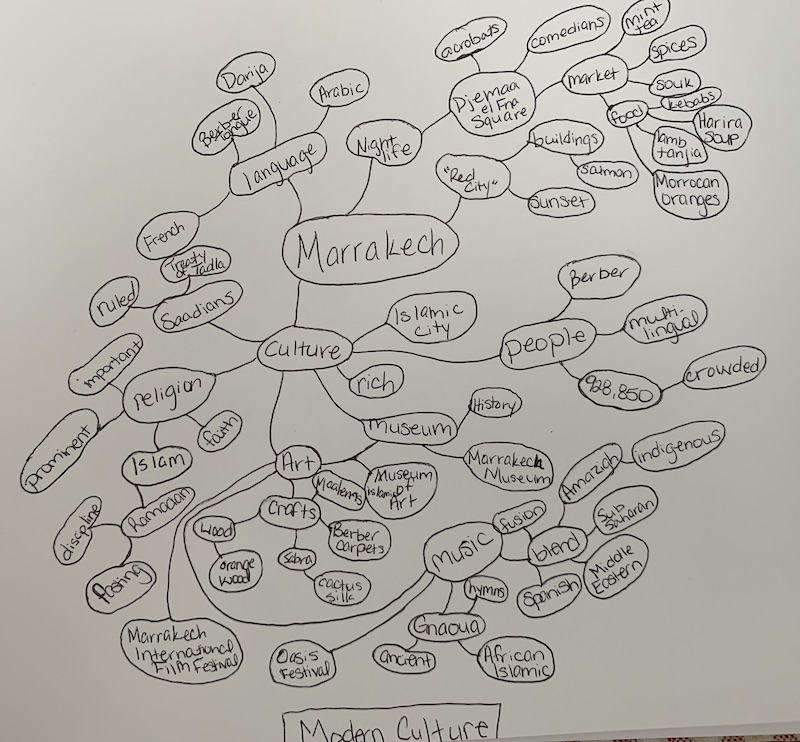
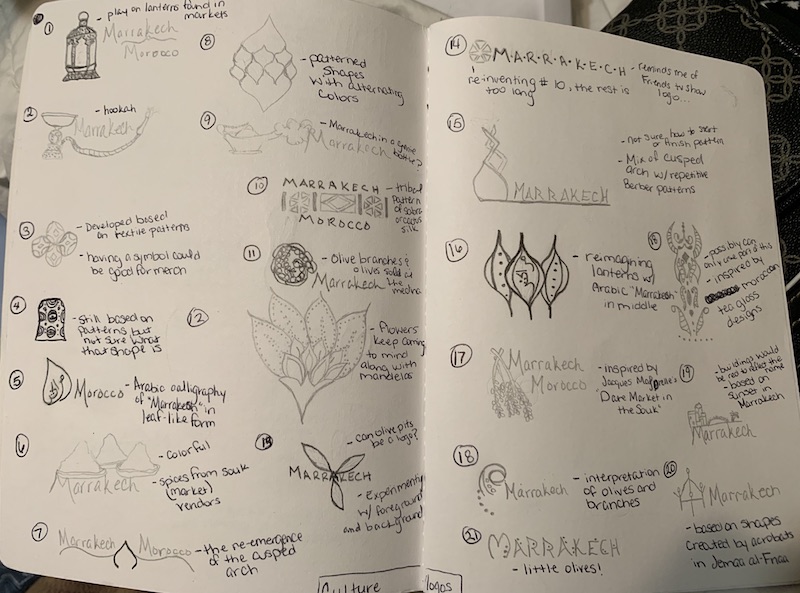
My mind map of Marrakech culture

Example of logos developed from Marrakech culture mind map

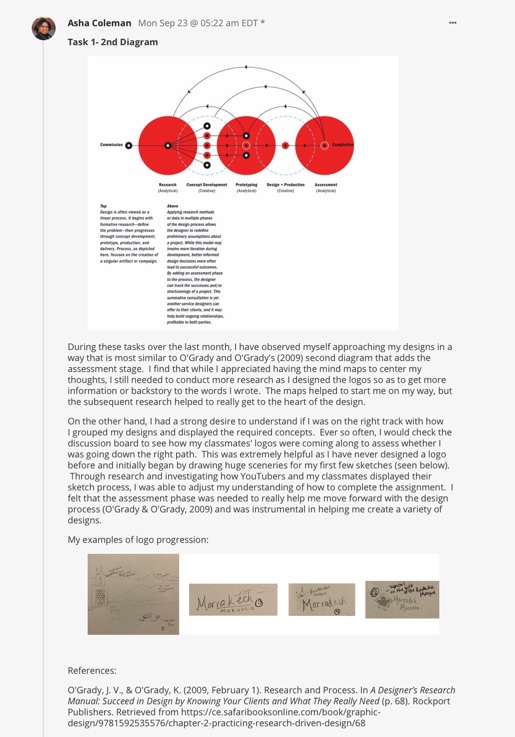
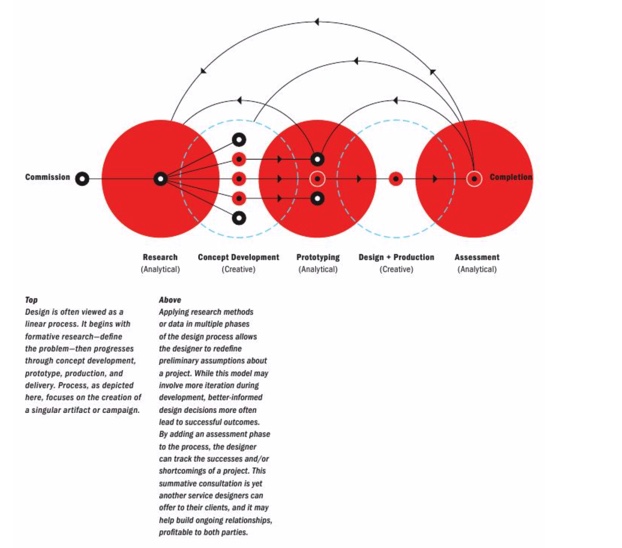
For this assignment, I needed to look at two diagrams created by O’Grady and O’Grady (2009) and choose the one that closest resembled the approach I took when completing the initial stages of logo design–mind mapping and sketching. Initially, the idea of designing logos was extremely daunting. Having the assignment broken down throughout the course definitely helped. I naturally gravitated to conducting research, creating prototypes, and then assessing my work before going back to do more research–as displayed in the following diagram (O’Grady & O’Grady, 2009).

My post for the Wk. 4- Task 1 Diagram Assignment

A better look at the diagram referenced in the post (O’Grady & O’Grady, 2009)

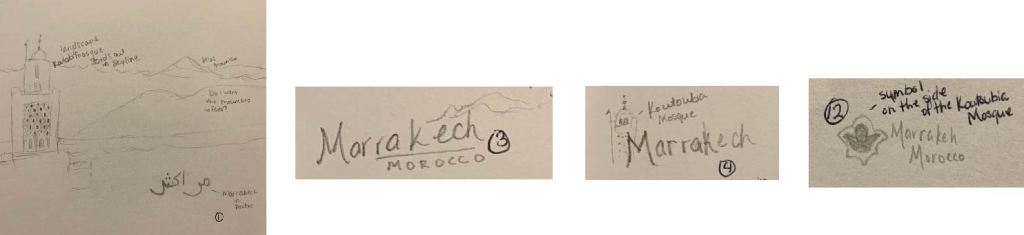
A better look at my logo progression

Interestingly, it seems that the process in the second diagram was shared amongst a few of my classmates, as well. I believe this process helps me to really solidify my ideas and as a researcher it’s like finding a resource to support your approach to the design. This may be why I appreciate critiques from others. It is helpful for me to know if I’m headed in the right direction before I get down to the finish line and realize I missed something entirely.

The critiques I received this month were instrumental in opening my eyes to what was working and what wasn’t working for my designs. I have started to understand more of what is meant when referring to keeping it simple or making it relevant as Airey’s 7 principles of logo design reference (as noted in McClung, n.d.). My next task will be to choose three logos from each category (geography, culture, and traditions) to revise for my final task. The critiques I have recieved from my classmates and the information I have learned, along with constant assessment, will help guide me through this process.

References:

McClung, R. (n.d.). MDM525 Week 3 Live Session. Retrieved from https://online.fullsail.edu/class_sections/46723/modules/182645/activities/1139434

O’Grady, J. V., & O’Grady, K. (2009, February 1). Research and Process. In A Designerโ€™s Research Manual: Succeed in Design by Knowing Your Clients and What They Really Need (p. 68). Rockport Publishers. Retrieved from https://ce.safaribooksonline.com/book/graphic-design/9781592535576/chapter-2-practicing-research-driven-design/68

Month 2: MDM525 Week 1 Reflections

Tick, tock goes the clock…

Funny how time flies, isn’t it? I’ve completed one course in my program already. This is the end of Week 1 in the second of 12 courses. It’s honestly gone by so quickly I almost didn’t notice the time passing. But here I am reflecting on what has passed while planning for what is to come.

This week’s assignments consisted of watching the Week 1 course video recorded by Professor McClung (n.d.) giving expectations of the course, but also for us as Graduate students. It was honestly a wake up call that I’m not on easy street and we were never in Kansas *Get it?!*.

So naturally, the next assignment is to think about what I’ve taken from the lecture (McClung, n.d.) and make actionable plans for incorporating these takeaways to my daily operations.

What are the key takeaways that will have the most impact on your experience as a graduate student?

One of the biggest takeaways from Professor McClung’s (n.d.) lecture was to take the program seriously as well as the work load. This program goes by quickly and if we aren’t willing to put in the time to further our skills or take advantage of the resources offered through the school then someone else will and will likely succeed where we don’t. It goes without saying that if something is not easily obtained then working hard for it will likely be the best course of action to getting it. For me, some of the assignments are not easily completed so I have to work harder than I did in my Undergrad and even harder than I did in my first Masters program. By taking the time now to refocus and plan accordingly, I can make the best of this program so that it renders the best results.

What are some questions and/or concerns that you may have about the program that may impact your future success?

As previously expressed, I often become concerned about my lack of design skills when facing new assignments in my courses. I’m new to using applications in Adobe Creative Cloud and do not consider myself to be much of an artist. Despite all of this, I get excited when faced with the challenges and opportunities this program presents. I have already learned to use social media apps such as Canva to create images with and have learned beginner skills in Photoshop as well as Adobe Illustrator. I’m still nervous when approaching tasks I’ve never done, but again this is when I have to remember that hard work and practice are how I will continue moving forward. I may not make perfect scores, but I will learn and that’s really what’s most important.

So what actions will you take to make your plans come true?

Watching the video by Sean Adams (2017) on the various forms of Graphic Design, I felt more inspired than ever that I don’t have to be a graduate of a formal program to continue in the design field. What is important though is being able to at least do a rough sketch of my ideas to help communicate what I am trying to accomplish. I have already started put actions to this by taking Drawing Foundations: Fundamentals (Kemp, 2014) on Lynda.com. While this course is not a part of my Media Design MFA curriculum, it will be a major help towards completing future coursework in the program as being able to sketch ideas is an important step accourding to Adams (2017).

I have also started the Learning path for “Becoming a Graphic Designer” (Lynda.com, 2019). This is a major part of supplementing my learning through this program that will be invaluable to me when I graduate. Although I do not have formal training as a Graphic Designer I will still need to be able to communicate with designers and others in a professional setting. Working on these certificate pathways are actionable steps to helping me not only further my goals, but will help reduce the anxiety of approaching new projects in the program. I am honestly excited to do the coursework now that I have made plans to use the resources Full Sail has provided.

References:

Adams, S. (2017, May 31). What is graphic design? [Video file]. Retrieved from https://www.lynda.com/Graphic-Design-tutorials/What-graphic-design/614734/625796-4.html?org=fullsail.edu

Kemp, W. (2014, April 28). Drawing foundations: Fundamentals [Video file]. Retrieved from https://www.lynda.com/Art-Illustration-tutorials/Drawing-Foundations-Fundamentals/158841-2.html

Lynda.com. (2019). Become a graphic designer [Online course]. Retrieved from https://www.lynda.com/learning-paths/Design/become-a-graphic-designer

McClung, R. (n.d.). MDM525 Week 1 Live Session [Video file]. Retrieved from https://online.fullsail.edu/class_sections/46723/modules/182645/activities/1139432References:

Yeah, still in Month 1: my social resources

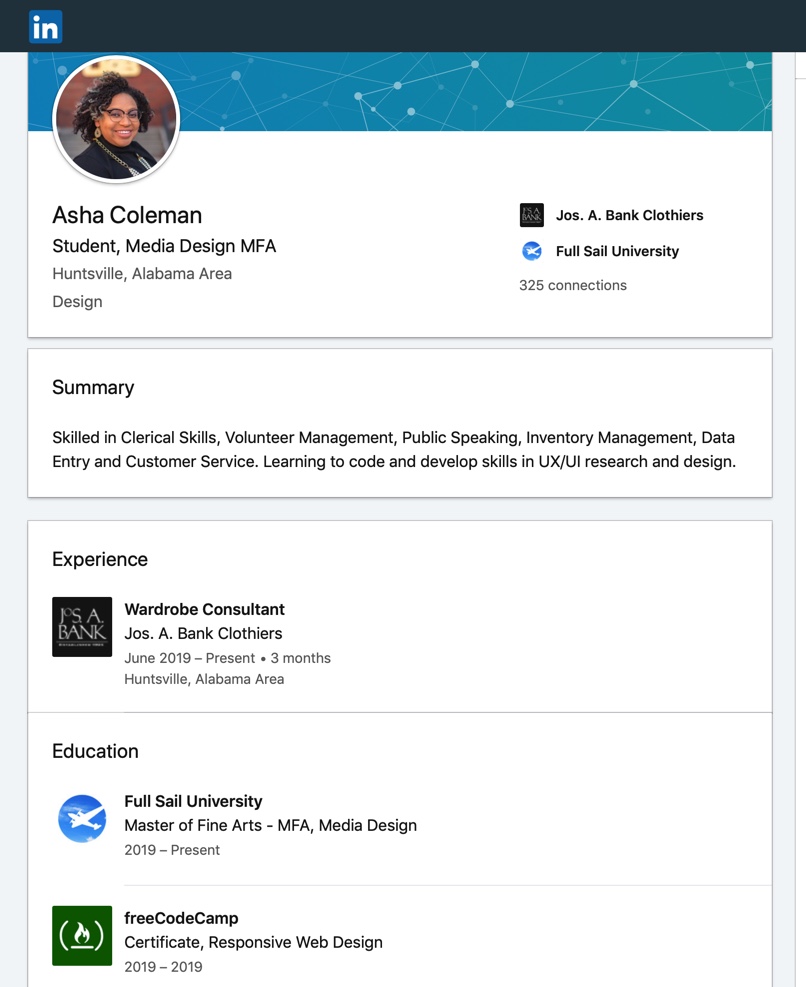
Throughout my career journeys I have learned early on that LinkedIn is a true resource for up-and-coming professionals as well as established individuals. It’s Facebook for work, lol. I have gone through and added people on LinkedIn that I don’t know, but they work in the field I’m interested in or for a company I’d like to work for one day. It’s all about connecting. I’ve added a screenshot of my LinkedIn page just to show what it looks like.

This is the public version of my site if we’re not connected

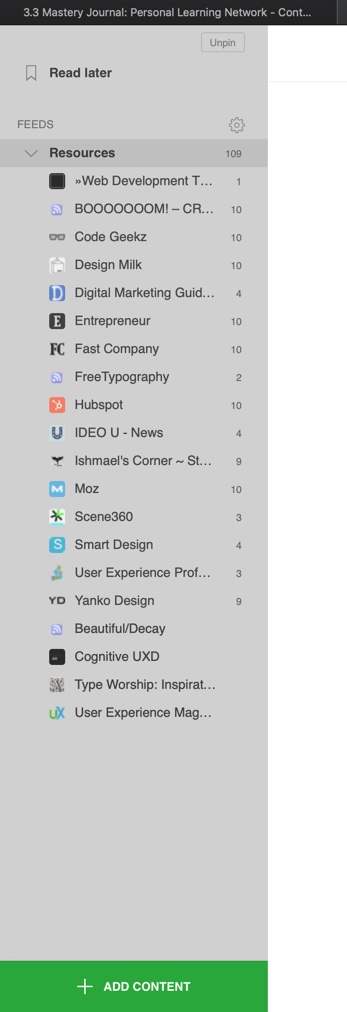
Now this one is new to me, but Feedly is awesome! It connects all the feeds of various brands and blogs in almost any field and puts them all on one page for me to see. I just started it today, but I’m already following at least 10 resources.

I will definitely be checking this at least once a day.

Also Month 1: Happily Creating Mistakes- a little inspiration for us all

This weeks lessons and all the fixins’…


On my first Mastery Blog assignment, I was supposed to create this blog, use a certain theme, add an About Me page, add an Intention Statement page, and post my first positive blog.

*WHEW*

That may not seem like a lot, but for me it was enough to make me a little nervous. I have not used WordPress before and at first sight, I was a little intimidated. Needless to say, I did everything I was supposed to and felt pretty proud of myself for overcoming the initial obstacle of navigating the interface but you can imagine my surprise when I got a 70 on the assignment. I was taken aback!

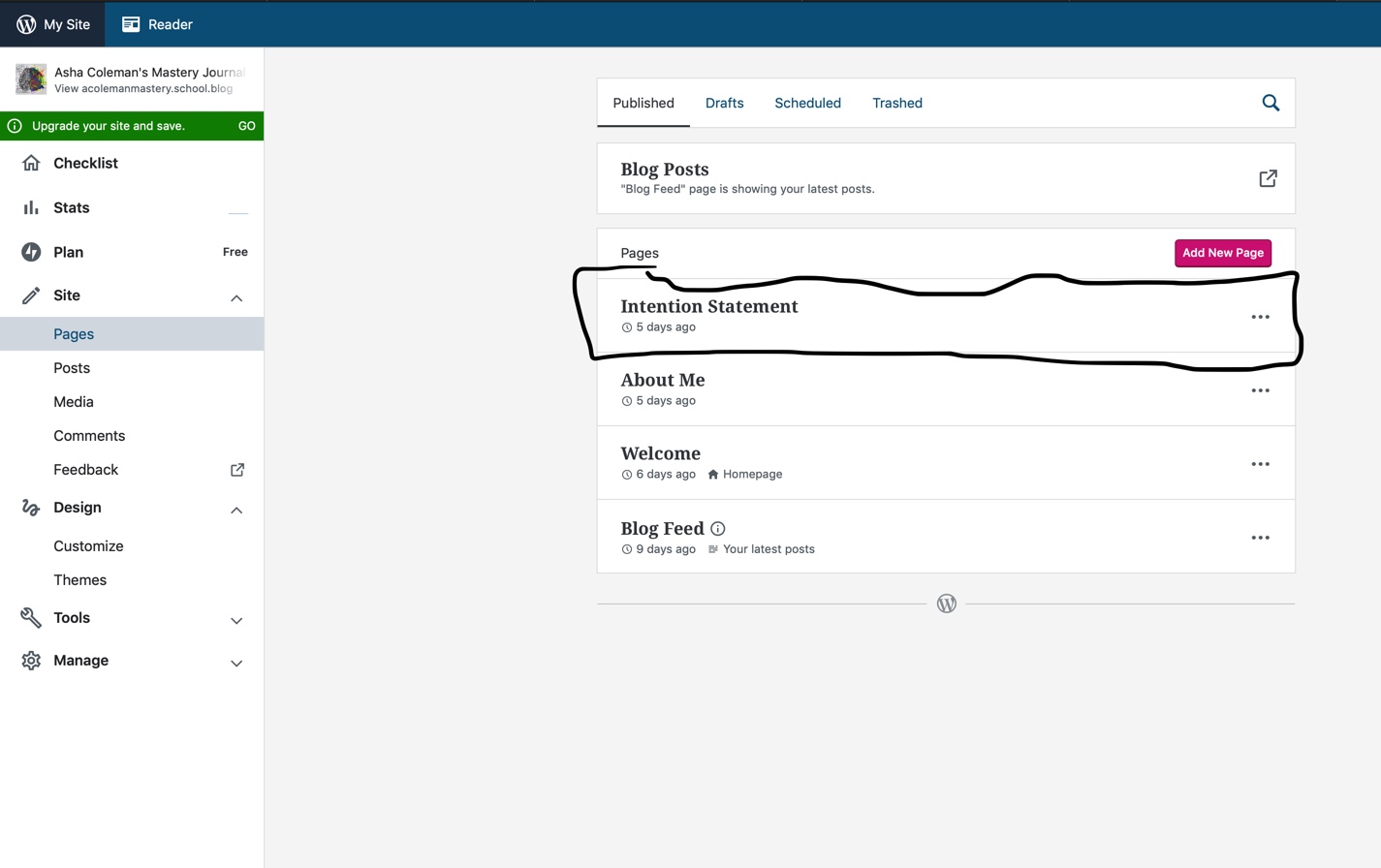
What did I do?! I couldn’t believe it. My professor’s feedback stated that my Intention Statement was missing from my site therefore I gained ZERO points for that portion of the assignment. I was angry. I couldn’t believe it. Even though I knew I wrote the Intention page and even published it, I had to go back and look for myself because clearly I was losing my mind. It was there. Just like the rest of my pages. SEE?!

It even says it was created 5 days ago! I swear I wasn’t lying.

Here’s the problem though. I didn’t attach the page to the “Primary Menu” so even though the Intention Statement page technically existed, it did not have an attachment to my blog.

I was so frustrated, I wrote my professor to dispute it. I mean I did do the work! So couldn’t I get some sort of credit for this?! All the other reasons why this wasn’t fair went through my head. For the record it was like 5 o’clock in the morning and I hadn’t slept.

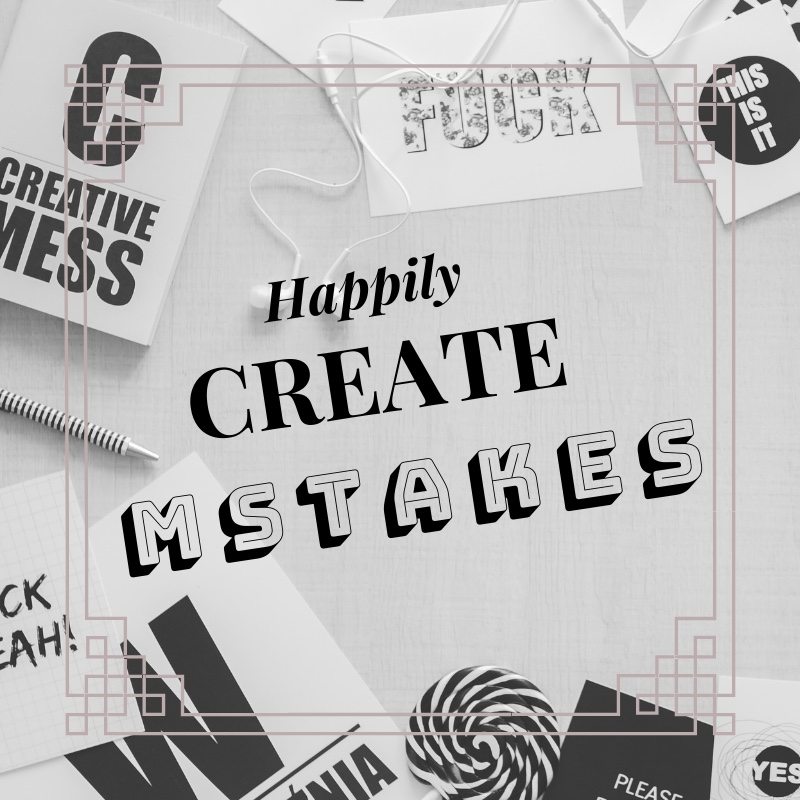
After some sleep and a healthy dose of reality, I’ve come to realize it doesn’t really matter. I mean if possible I’d really love to get credit for that Intention Statement page *hint, hint*, but honestly, at least I did it. At least, I learned to utilize a platform that I have not used before in 3 days mind you and only made a minor mistake of not linking a page to the menu. The page is linked now, but even if I don’t get credit, I’m happy I’m learning. I guess that’s my whole point for writing this post. Nothing super enlightening, just learn from your mistakes and be happy you recognize them. Keep happily creating mstakes, everybody!

I made this to help remind us all. And it was my first time using Canva!

Month 1: My First Inspirational Post

Watch the video! Otherwise you won’t know what I’m writing about.

I remember when I first saw this video and I thought it was cute and funny. After some time passed, I would watch it when things sucked. Even when things were going well, I found ever so often I would pull this video up just to make me smile. Kid President. He had such a major impact on people…or at least the ones around me.


Like that dude from Journey said, ‘Don’t stop believing…unless your dream is stupid’ then you should get a better dream.

– Kid President


Through this career journey, I realized that I may not become the exact thing I want to be as a kid, but it doesn’t mean I should just stop trying to do something that makes me happy and helps others. We all need a pick me up now and then. So just enjoy it for what it is. A cute video to some. A reminder to hold onto our childhood innocence for others. And the final push to take that step you’ve been afraid to take. Next time I’m having a difficult time with school, I can turn this video on for a pick-me-up! And I encourage you all to do the same. What are some of your inspirational quotes, thoughts, or videos?! Share them with me so we can all be pumped!

Works Cited

Giphy. Kevin Hart Lets GIF. 7 May 2019, giphy.com/gifs/lets-kevin-hart-do-this-hT6wgEtwoUt0no87gV. 

Soulpancake. (2013, January 24). A pep talk from Kid President [Video file]. Retrieved from https://www.youtube.com/watch?v=l-gQLqv9f4o